
The Bridge
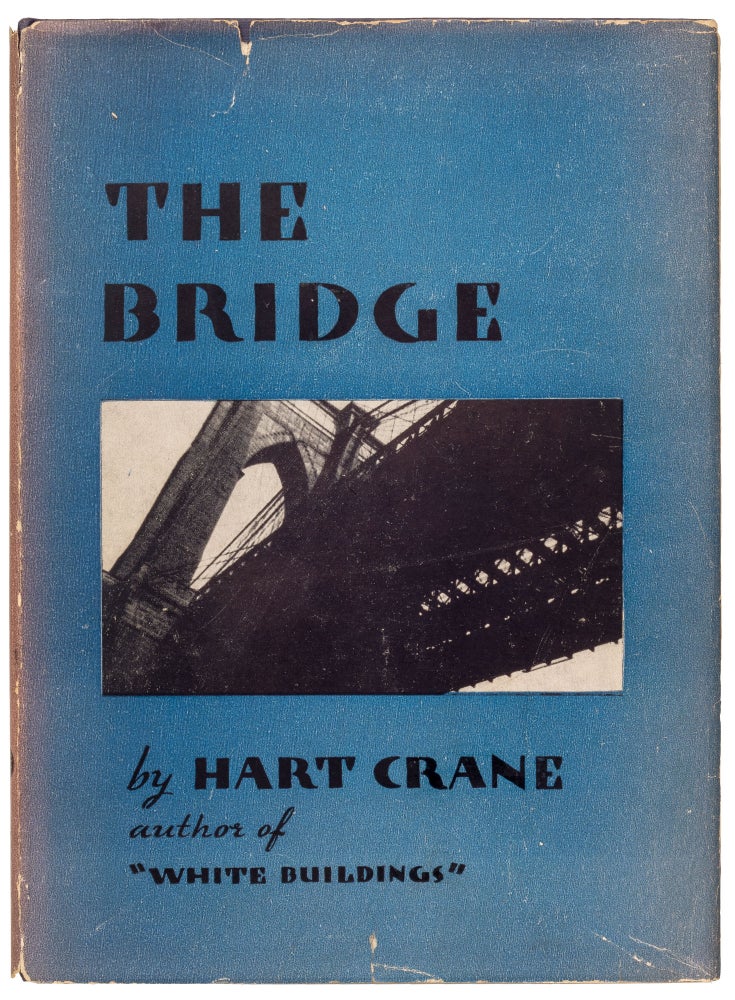
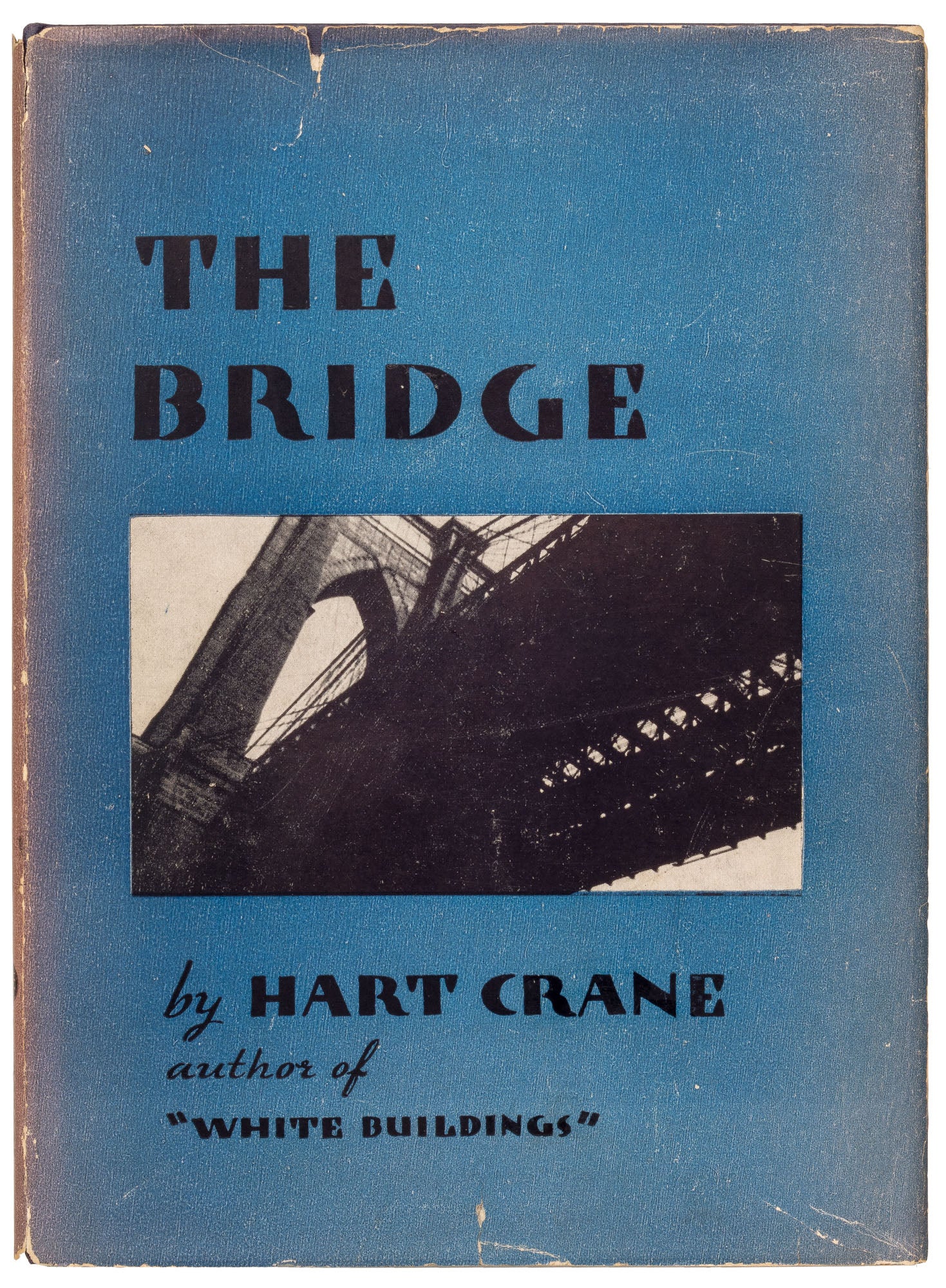
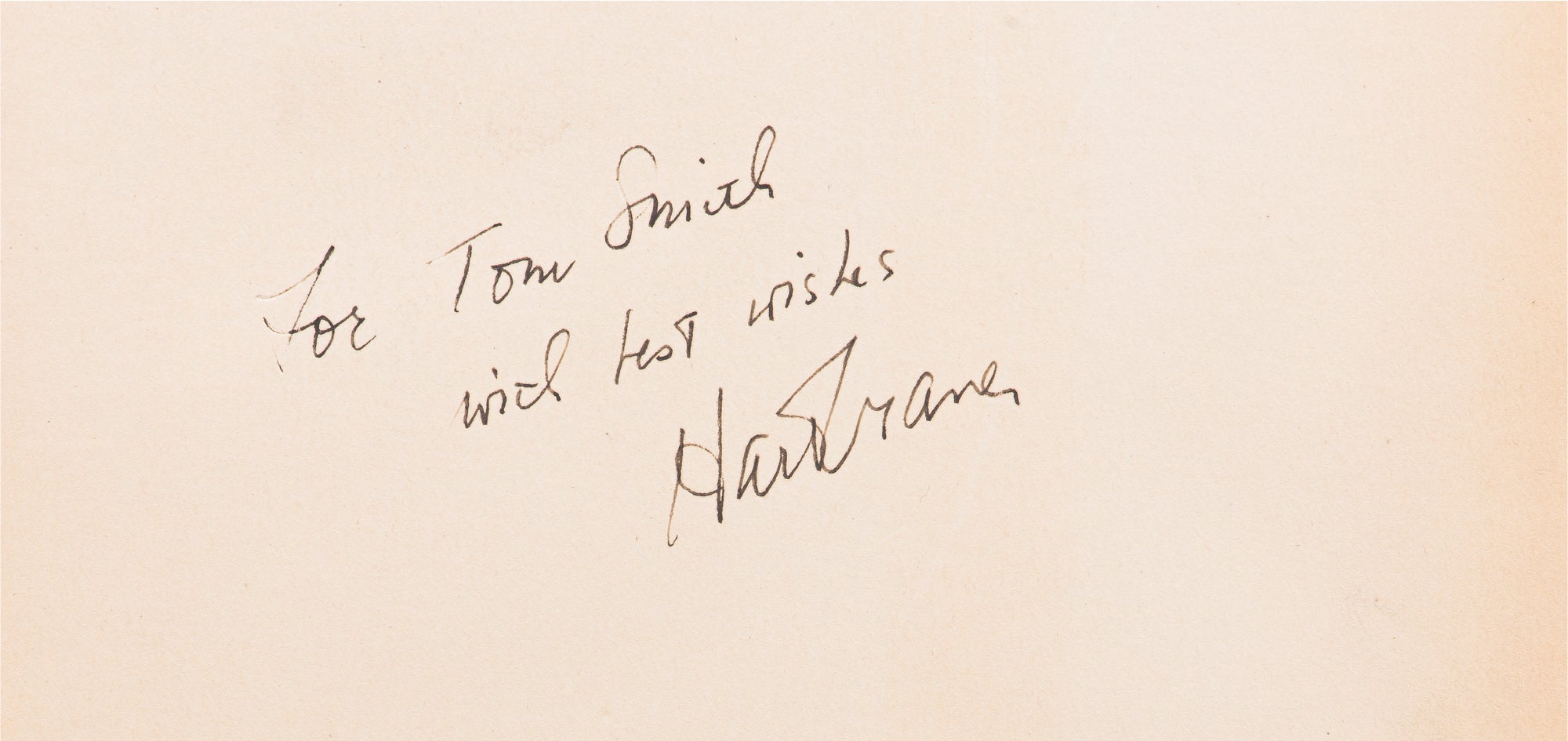
New York: Horace Liveright, 1930. First Edition. Hardcover. 1st American edition and 1st trade edition (a rawly edited, 275 copy, Paris limited edition preceded). The Bridge is a metaphor of American power, and was itself a bridge between past and present, a transition from 19th to 20th century poetry. Fine in a very good jacket, spine faded, tape removed, short tears strengthened, but integral and superior for it. Author to editor signed presentat– ion copy (in ink), a lofty association, inscribed to Tom Smith, editor in chief for Horace Liveright, the publisher of The Bridge, and it is Tom Smith’s fingerprints that are all over this poem, perfected here by his precise editing, revising and correcting, and the nearly unfathomable Crane needed editing more than most. Ref: Connolly 100. Fine / very good. Item #71
Tom Smith was an enormity, a leading force in the American literary renaissance that changed literature and the relationship between it, and the American public, profoundly and forever. And it was the relationship between Horace Liveright and Tom Smith, that was the inspirational model for Ben Hecht and Charles Mac Arthur (yet another relationship), as they co–wrote and co-directed their 1935 film noir (if anything before 1941 is technically classified as noir), The Scoundrel, which won the Oscar for best screenplay. This is the best copy of The Bridge I’ve ever heard of.
Hart Crane's "The Bridge" (1930) stands as a monumental counterpoint to the disillusionment of modernist poetry, particularly T.S. Eliot's "The Waste Land." Where Eliot saw fragmentation and decay in modern America, Crane ambitiously attempted to construct a mythic vision of American unity and possibility through the Brooklyn Bridge as a central metaphor. The poem's formal innovation—blending lyrical fragments, historical references, and mythological elements—showcases Crane's attempt to craft an epic that could reconcile America's technological progress with its spiritual yearning. His complex, densely metaphorical language creates a visionary architecture mirroring the bridge itself, spanning disparate American experiences into a unified cultural statement.
Crane's marginalized identity as a gay man in early 20th century America profoundly shaped the poem's themes of isolation, transcendence, and unfulfilled longing. His personal struggles with depression and societal rejection find expression in the poem's tension between ecstatic vision and underlying despair. The bridge itself becomes a potent symbol for connection across impossible divides—perhaps reflecting Crane's own yearning to bridge the gap between his authentic self and a society that demanded conformity. This biographical context illuminates the poem's preoccupation with transformation and its quest for spiritual wholeness amidst alienation. Ultimately, "The Bridge" represents both Crane's heroic attempt to construct an affirmative American mythology and a deeply personal expression of his quest for belonging and transcendence in a world where he felt fundamentally out of place.
Price:
$50,000.00