
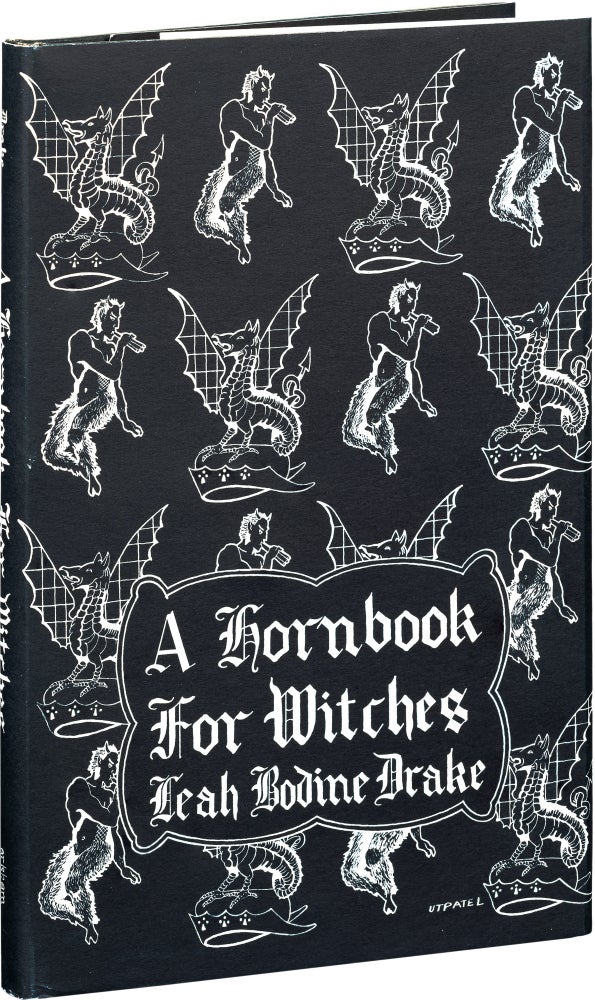
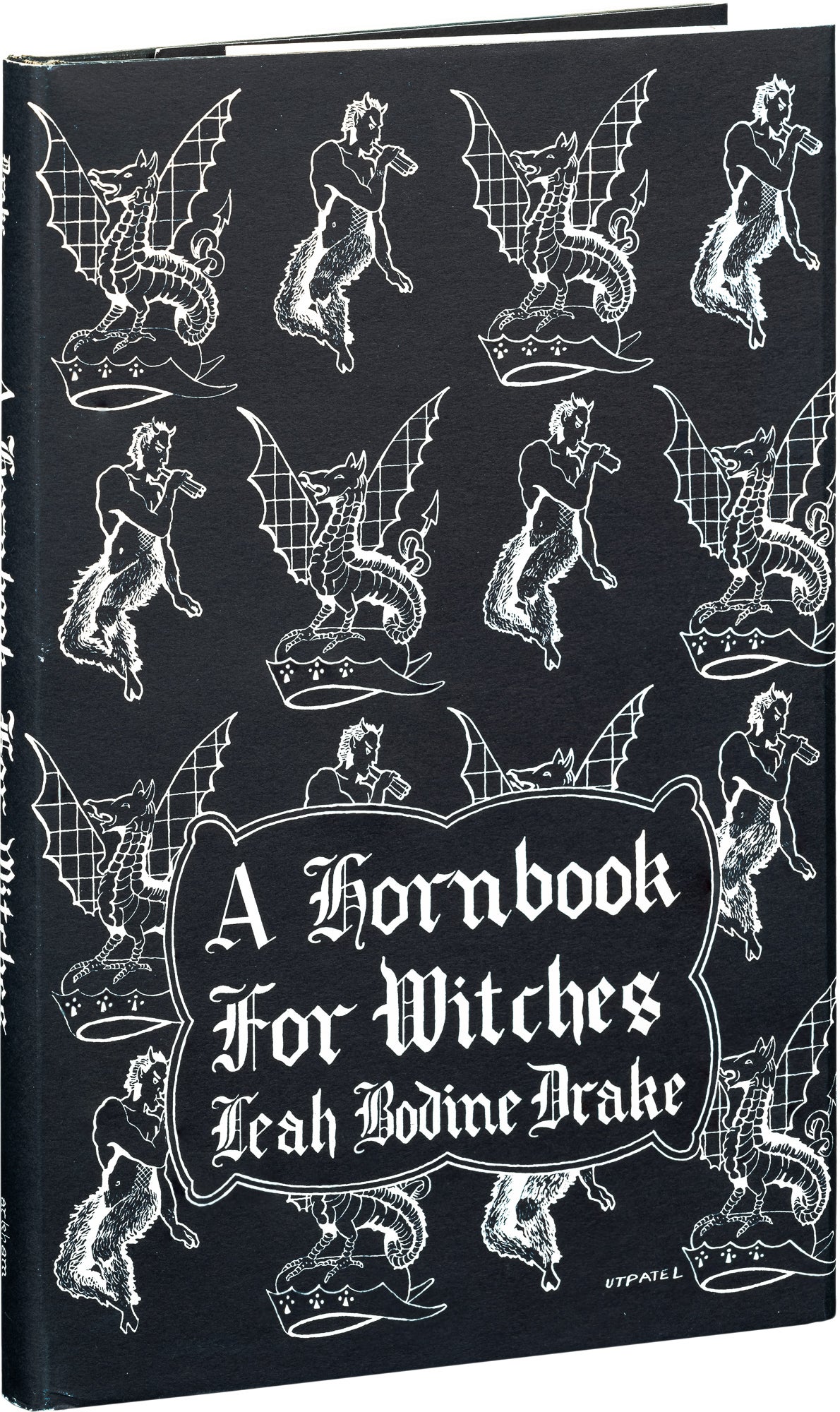
A Hornbook for Witches
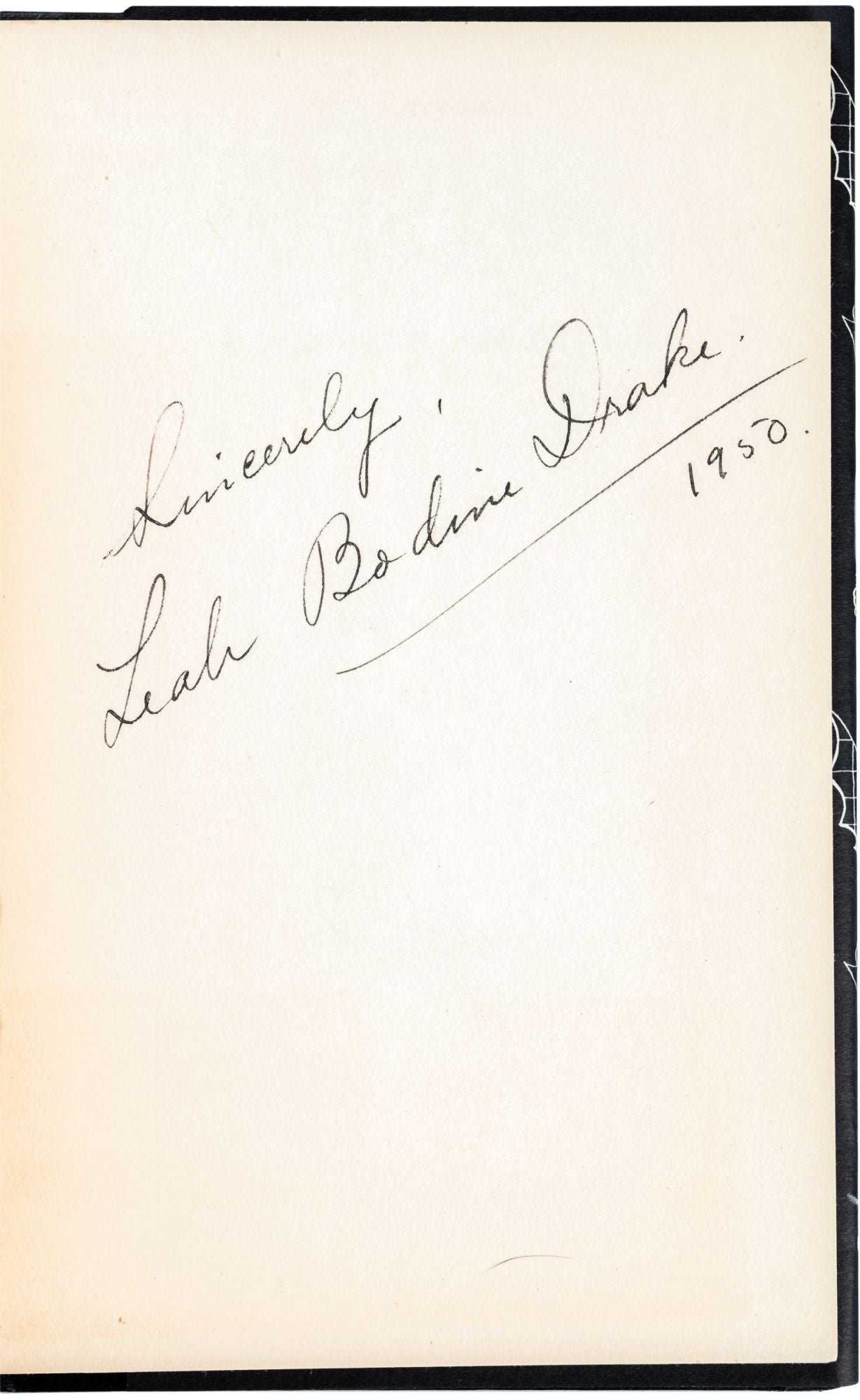
Sauk City: Arkham House, 1950. First Edition. 1st edition. Signed. Some rubbing to the corners, toning from acidic binder’s glue along the gutters, else near fine in fine (actually fine) dust jacket. One of the smallest publications of any Arkham House book at 553 copies, Drake self-financed the printing and took 300 copies for her own distribution. Fine copies are rare and signed copies scarce. Custom ¼ morocco slip case. Item #858
This is Drakes first book, but she was already well known from the mid 30s as one of the more popular poets of the horror and fantasy genre, regularly appearing in Weird Tales.
Women's place in horror and fantasy literature has historically been characterized by marginalization despite significant contributions dating back to the Gothic tradition established by Ann Radcliffe in the late 18th century and Mary Shelley's genre-defining "Frankenstein" in 1818. Throughout the Victorian era, writers like Charlotte Perkins Gilman and Edith Wharton produced influential supernatural fiction while negotiating gendered expectations about "appropriate" subject matter. When Leah Bodine Drake published through Arkham House—a publisher primarily known for male authors like Lovecraft and Bradbury—women remained peripheral figures in genre publishing, receiving smaller print runs and less critical attention despite reader demand evidenced by Drake's presence in popular periodicals like Weird Tales.
This marginalized position exemplifies what feminist scholar Elaine Showalter terms the "double consciousness" required of women writers navigating male-dominated spaces. As Showalter observes, "Women's writing is always bisexual... divided between duty to masculine literary standards and fidelity to female experience and perception," a tension particularly evident in horror and fantasy where women writers frequently navigated between conforming to male-established conventions and articulating distinctly female perspectives. These creative constraints may paradoxically explain why women have produced such a disproportionate number of enduring classics within the genre, as the necessity of working within and against restrictive conventions fostered innovative narrative strategies that ultimately transcended generic boundaries.
While contemporary discourse acknowledges the interventions of female authors like Jackson, Carter, and Kiernan in destabilizing the phallocentric epistemologies of supernatural fiction, the historiography of women's contributions remains undertheorized. The material conditions of Drake's publication—self-financed with limited distribution channels—illustrates the gendered political economy of horror publishing that persists today. Despite increased visibility for women authors in the twenty-first century, quantitative analyses demonstrate persistent disparities in advances, critical reception, and canonization processes that privilege male authorship while relegating female-authored texts to what Gilbert and Gubar characterized as the "anxiety of authorship" within masculine generic frameworks.
They named It the Jabberwock
For want of another;
But some shook their heads; "It's
The Devil's own brother!"
Then people came to church
Who'd never been yet.
Some patched up a quarrel
And some paid a debt.
-The Jabberwock.
Price: $6,250.00